2026 Clean Hands Index
Independent Benchmarking of Public Handwashing
The Clean Hands Index functions as an autonomous benchmark, bridging the gap between user desire, technical specifications, building management, architectural vision, and actual performance outcomes in the field.
The 2026 Clean Hands Index was completed using three methods:
- Five Surveys
- One year of Field Research
- Interviews
Key Findings
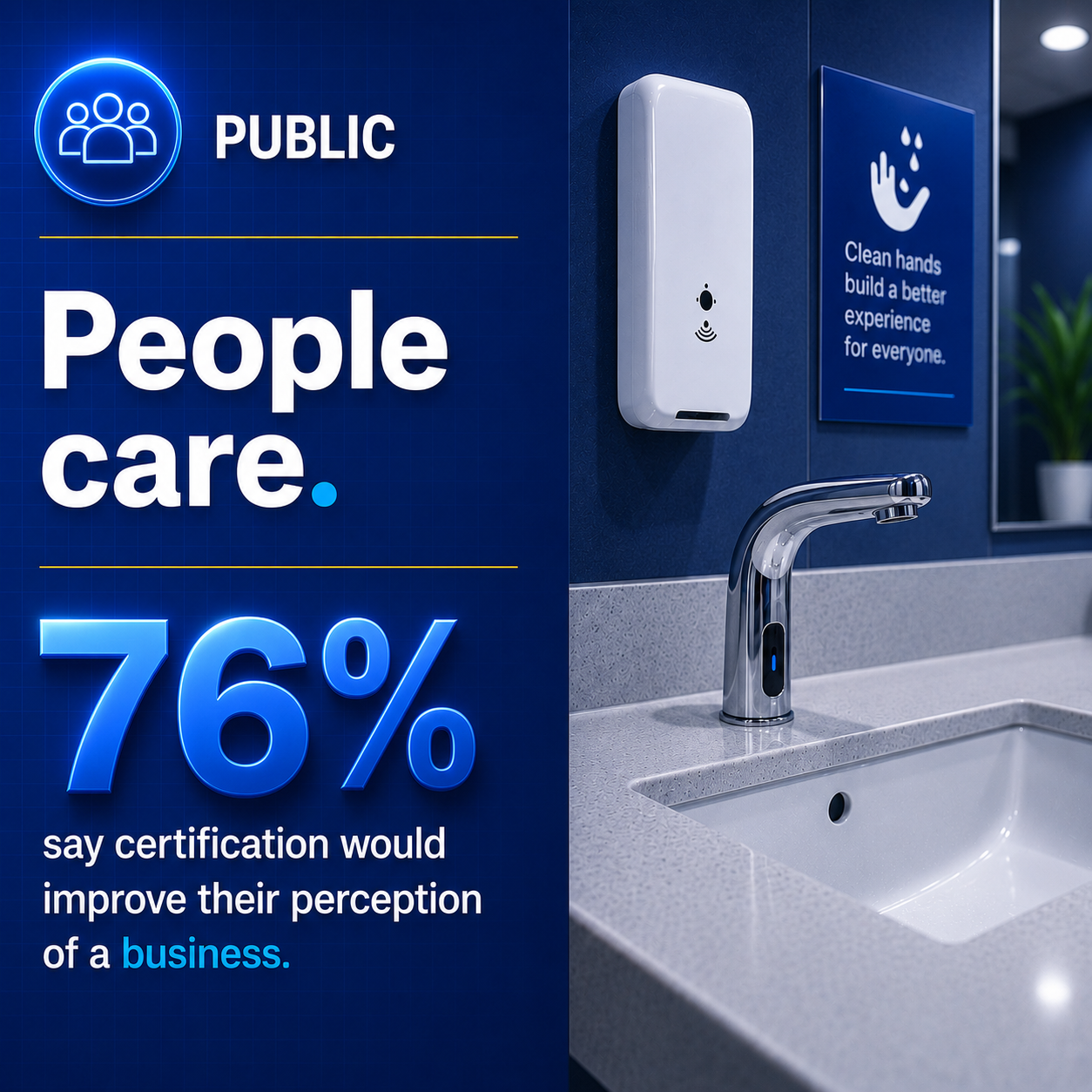
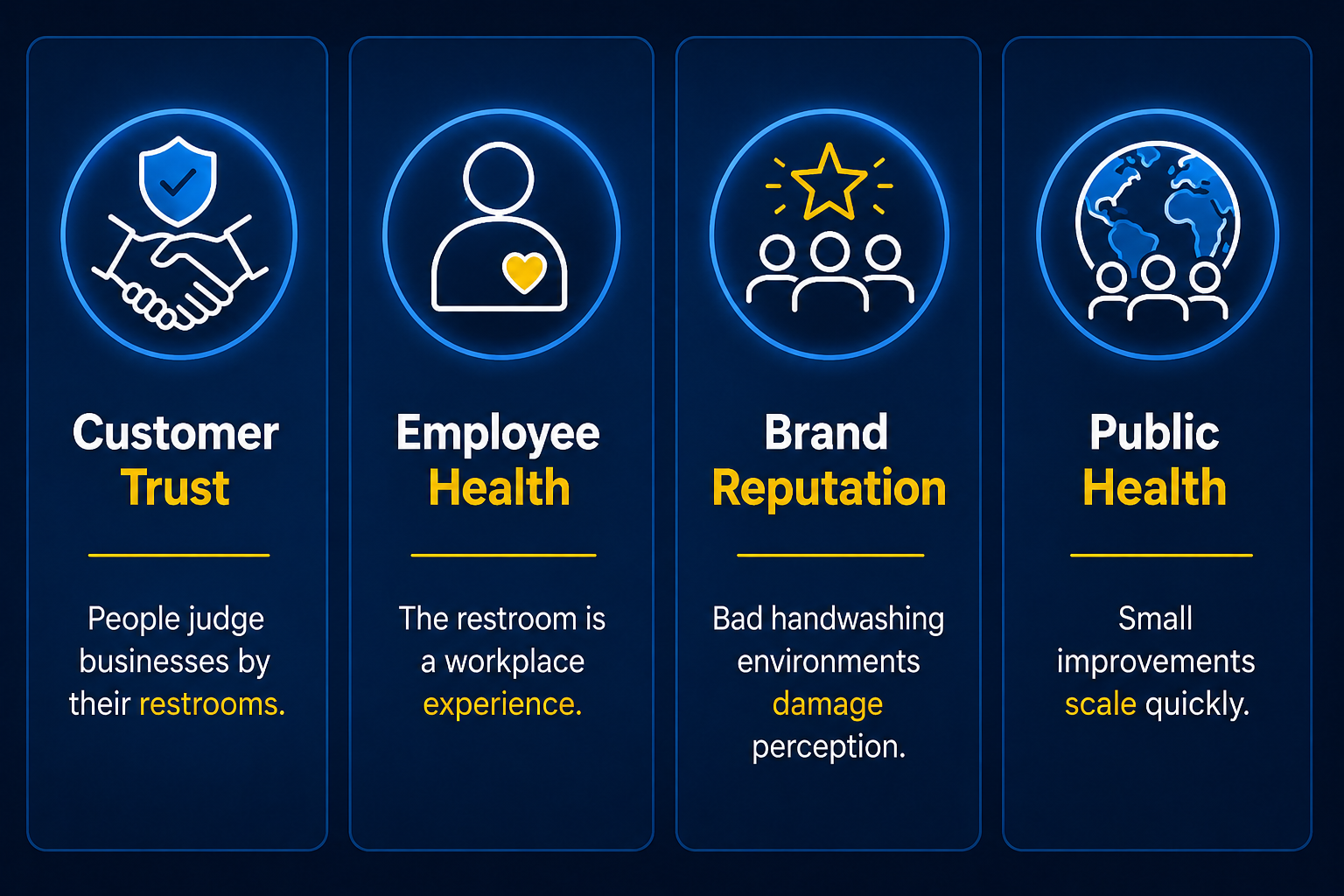
75% say better handwashing facilities increase their likelihood of returning to a business.
68% of the public want a touch-free experience from start to finish.
60% wash longer when warm water is available.
75% of people avoid touching restroom exit doors after washing their hands.
7.1% of evaluated facilities delivered all five hygienic handwashing criteria
What We Learned by Category
The Industry Agrees
Why This Matters
Core Thesis
The 2026 Clean Hands Index reveals that public handwashing is not failing because people do not care. It is failing because the built environment does not reliably support the behavior people are expected to perform.
- The public says handwashing matters.
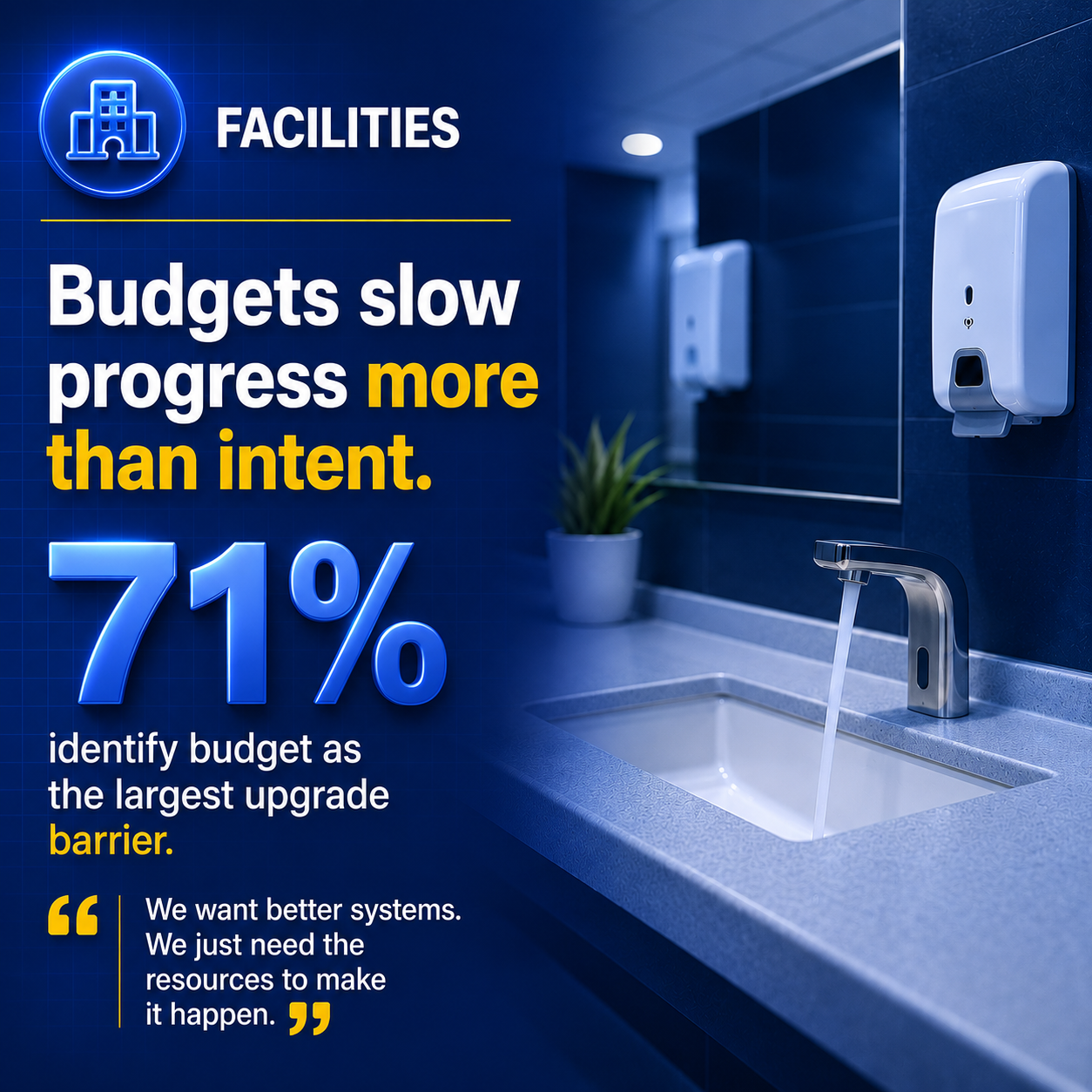
- Facility teams say better systems would help.
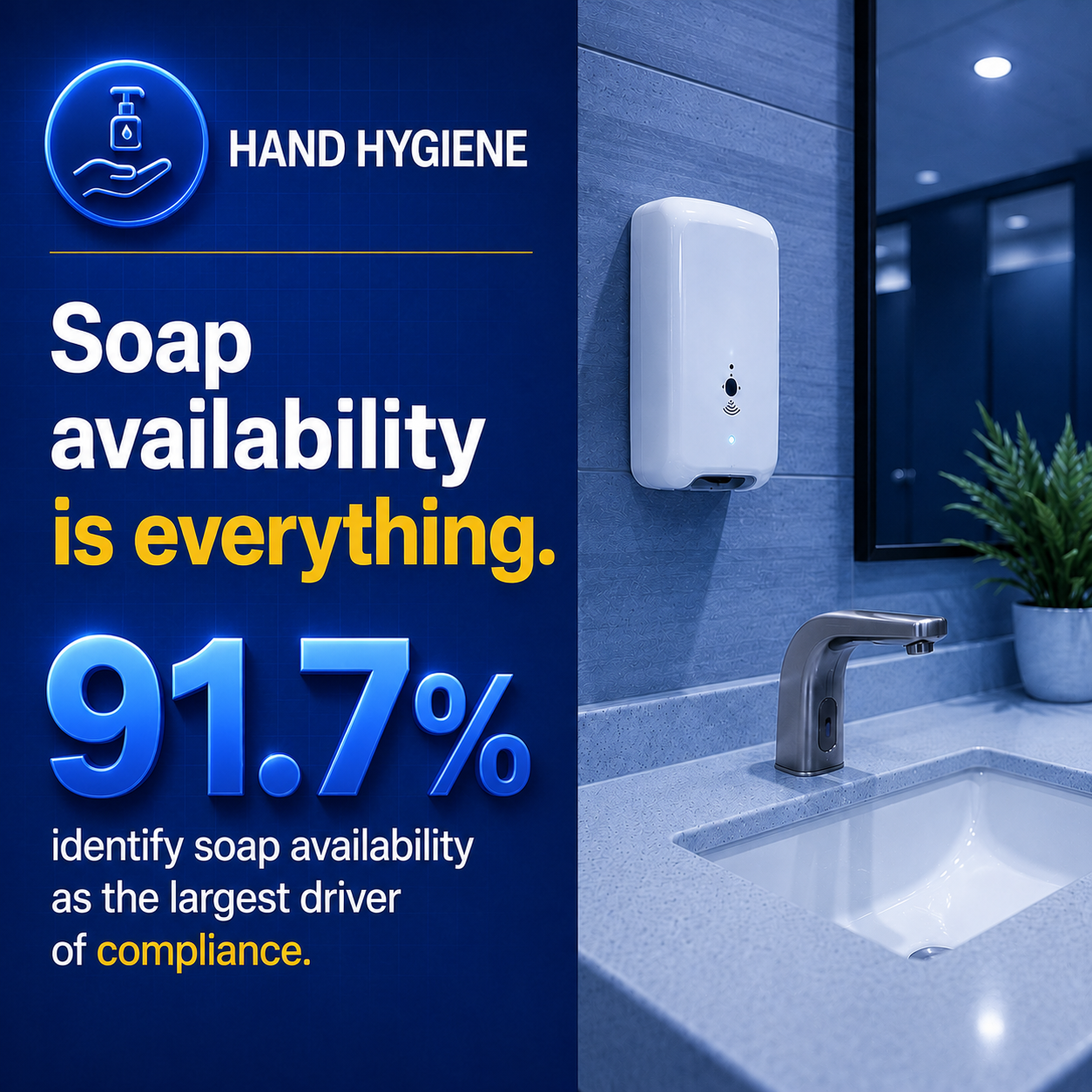
- Manufacturers say availability and reliability drive compliance.
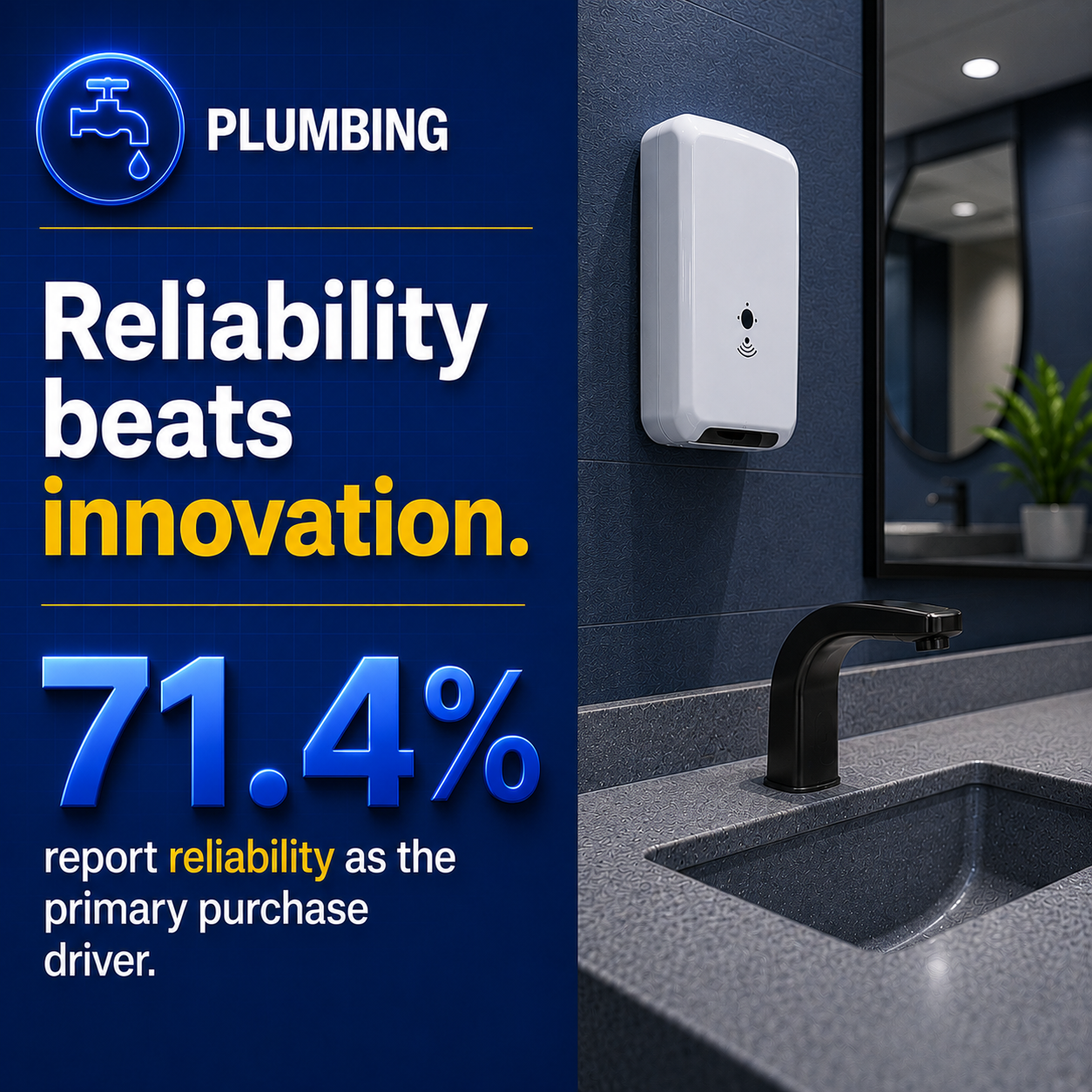
- Plumbing professionals say real-world performance often breaks down after installation.
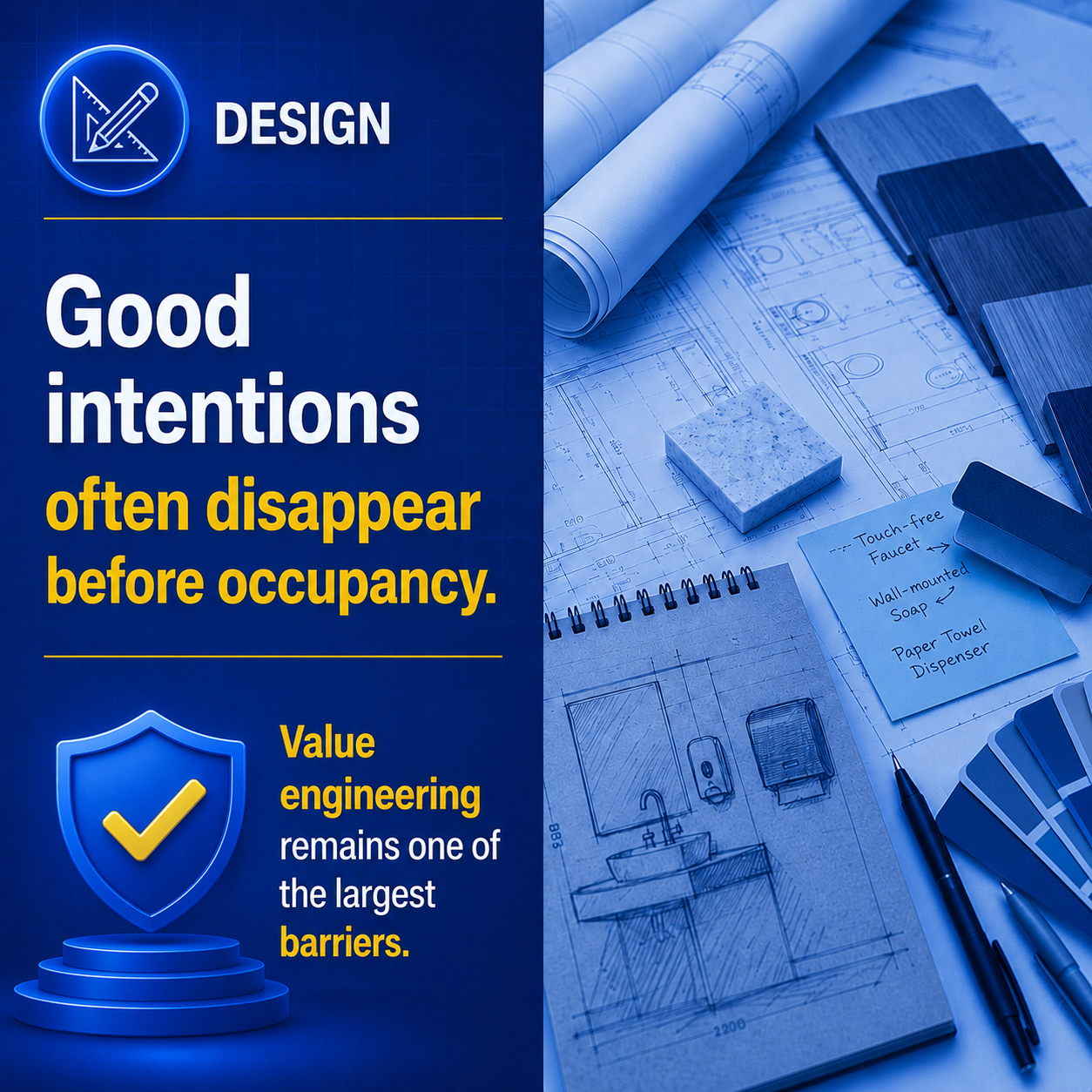
- Architects and designers say hygiene features are valued but frequently compromised by budget, construction decisions, and inconsistent standards.
The central finding is blunt:
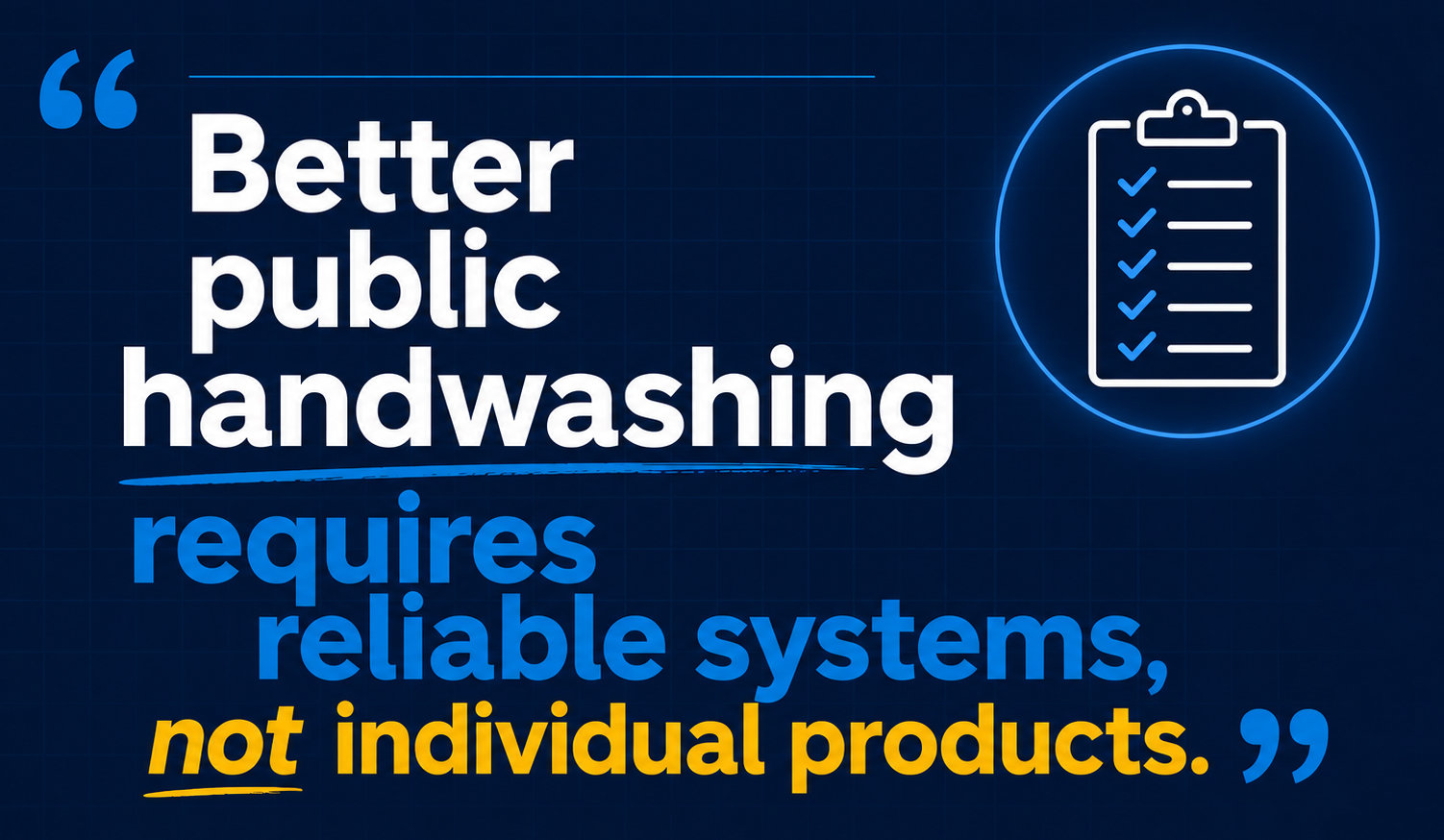
“Public handwashing is treated like a fixture purchase, but it performs like a system”
That system includes soap, water, temperature, drying, exit design, maintenance, refill routines, specifications, installation, user behavior, and public perception. When one link fails, the handwashing experience fails.
The Solution
Clean Hands Certified has been developed as a bridge between the moving parts of public handwashing and the public to establish and verify a common performance standard and to give the public a voice for the first time.
Five criteria have been established for facilities to become certified and give the public what they have been requesting while increasing trust with the facility owner.